

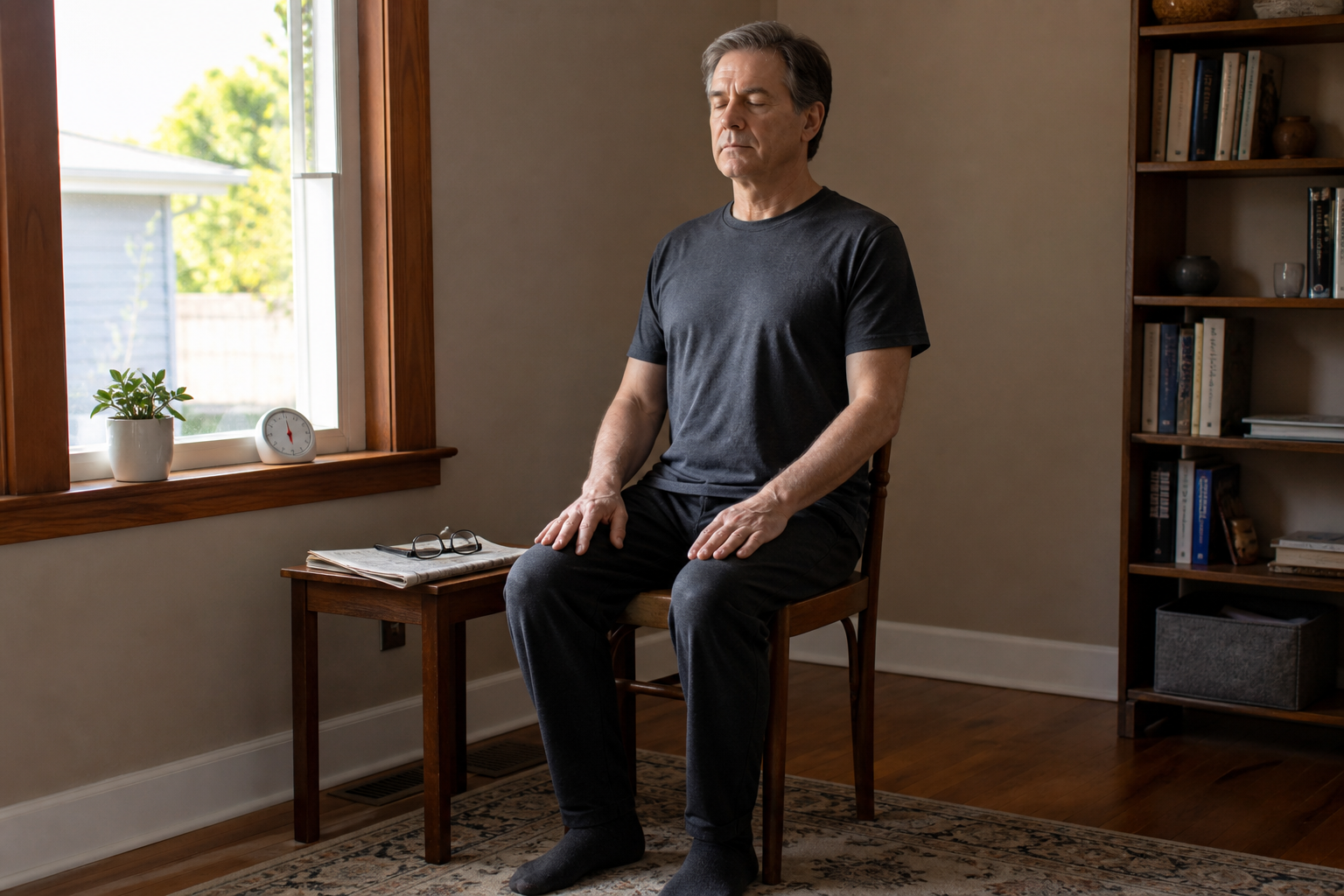
Quick guide
Meditation includes several practices. One simple starting point is to notice an anchor, such as a sound or comfortable breathing, and gently return when attention wanders. You do not need to force stillness or achieve an empty mind.
Choose a setting and position you can use
Sit, stand or use another supported position that is comfortable for you. Keep your eyes open if preferred. You do not need a particular cushion, incense or app. Reduce interruptions where possible, but an imperfect setting does not make the exercise a failure.
A brief attention practice
- SettleChoose a comfortable position and a short, optional time limit.
- NoticeAttend to a neutral sound, a visible object or unforced breathing.
- ReturnWhen you notice wandering, come back gently.
- CloseLook around and decide whether to repeat, adapt or stop.
Start small without treating a number as a prescription
You might experiment with a minute or two. A longer practice is optional, not a test of commitment. There is no single best duration, time of day or posture for everyone. If a timer makes you anxious, choose another way to end.
Wandering attention is expected in this kind of exercise. Notice it without scoring yourself. If attending to breathing is uncomfortable, try an external anchor; do not force deep or slow breaths.
What can you reasonably expect?
NCCIH’s review of meditation and mindfulness describes evidence and limitations for several health-related uses. Different methods and programs are studied; those findings are not a guarantee that a few self-guided minutes will produce the same result.
You may value a pause or a chance to notice what is on your mind. You may also find it unhelpful. A calm session is not proof of a special ability, and a difficult one is not proof that you are resisting progress.
Adapt rather than push through
Some people experience increased distress with meditation. If this happens, stop or change the activity and seek qualified advice when needed. A gentle walk or ordinary conversation may be preferable, but no alternative is automatically right for everyone.
If trauma memories, unusual experiences or other symptoms are troubling you, discuss them with an appropriately qualified professional. Meditation should not replace care or delay an assessment.
Choosing a recording, class or teacher
- Look for clear instructions, options and permission to stop.
- Ask about training and the scope of any health claims.
- Check the price, renewal terms and whether personal information is collected.
- Avoid guaranteed cures, required activations or pressure to ignore distress.
Free resources and paid instruction both need judgment. Choose by the actual practice and your needs, not by a promise of rapid transformation.
Frequently asked questions
Do I have to stop thinking?
No. In a simple attention practice, noticing wandering and gently returning is part of the exercise.
How long should a beginner meditate?
There is no universal duration. You can try a brief, comfortable experiment and stop or adapt as needed.
Must I focus on my breathing?
No. A neutral sound or visible object may suit you better. Do not force breathing that feels uncomfortable.
Can I keep my eyes open?
Yes. Choose an approach and position that feel comfortable and safe for you.
Can meditation make distress worse?
It can for some people. Stop or adapt an upsetting practice and seek qualified support when symptoms persist or are concerning.
Can it replace treatment?
No. Do not use a self-guided practice as a substitute for appropriate healthcare or prescribed treatment.
This article provides a concise overview of meditation and its benefits. It’s fascinating how research shows that mindfulness can lead to improved cognitive function and emotional well-being. A must-read for anyone interested in mental health.
@MeditationMaster Chill out! There’s plenty of evidence that shows meditation can help with stress management and decision-making skills. It might not work for everyone right away but it’s worth trying out.
*sarcastically* Oh great, now I need to find time to meditate too? Just what I needed on top of my already packed schedule! Maybe I’ll meditate about having more time instead.
I absolutely loved this article! Meditation has transformed my life for the better. I’ve become more focused and less stressed, which has definitely helped me in my career. Everyone should give it a try!
Honestly, I don’t see how sitting quietly and breathing is going to change anything significant in my life. This seems more like wishful thinking than a practical solution. There must be more to success than meditation.
But Sam, what if meditation helps you tap into your creativity? Sometimes the simplest practices yield profound results.
I agree with you, Sam! There are scientific studies out there that support meditation’s benefits. Maybe give it another look?
When I first started meditating, I thought it was a total joke—just sitting there doing nothing? But then I found myself actually enjoying those quiet moments of peace! Who knew silence could be so loud?
! Wow, this is just another fluff piece on the internet! Meditation isn’t a one-size-fits-all solution for stress or clarity; it’s not magic! People need real strategies, not just deep breathing tips!
*laughs* I guess if meditating could really solve all our problems, we would all be millionaires by now! But hey, at least it gives us an excuse to sit around doing nothing for a bit!