

At a glance
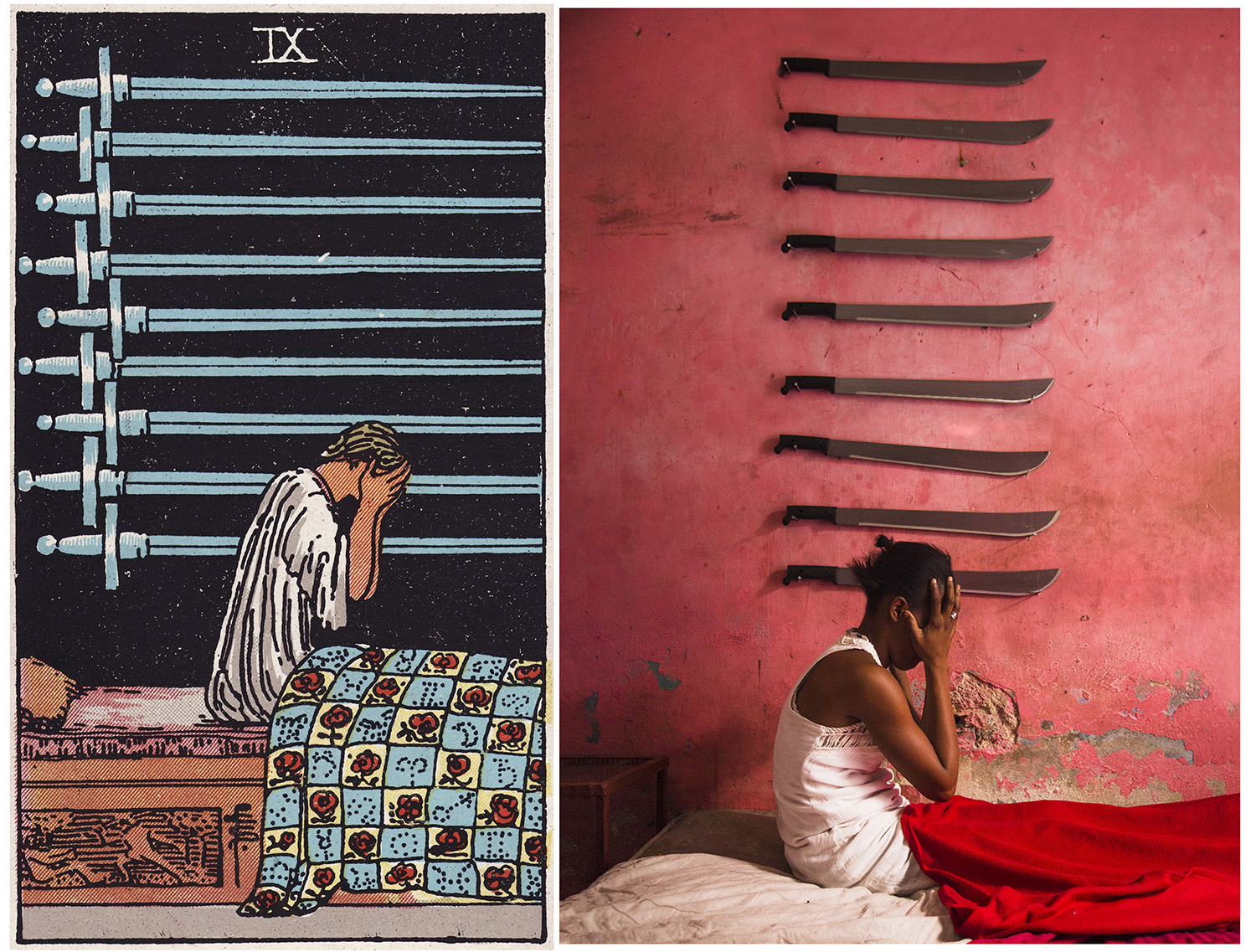
Ghetto Tarot brings familiar tarot scenes into a photographic collaboration in Haiti. It offers a distinctive example of how artists can reinterpret an established visual language.
The collaboration
The project’s official website credits photographer Alice Smeets and the Haitian artists’ collective Atis Rezistans. Their scenes reinterpret the Rider-Waite-Smith imagery using materials the collaborators could find or make locally.
The artists’ sculptures and resourcefulness are central to the project, not simply a background for it. The site describes objects made for particular scenes, including a lantern fashioned from an old metal can for the Hermit.
Look at what the images change
Compare a scene with the card you know. What is recognizable? What does the setting add? Which details draw your attention first? The same visual theme can invite different responses from different viewers; a new deck need not produce an identical interpretation.
Choosing a deck for reflection
- Look at several cards, not only the box or one striking image.
- Read the creators’ explanation and acknowledge their contribution.
- Consider whether the pictures and guide are accessible and engaging for you.
- Keep interpretations open rather than treating an image as a factual verdict about someone.
While I appreciate the effort, I can’t help but think that this project romanticizes poverty. It seems more like a publicity stunt for Smeets than a genuine effort to support Haitian artists. Where’s the real impact?
‘Ghetto Tarot’ sounds like the kind of quirky card game you’d find at a hipster coffee shop! Imagine pulling ‘Despair’ as your daily mantra—what a way to start your day with some existential dread!
“This article had me at ‘Ghetto’. It’s fascinating how Alice Smeets uses tarot as a lens through which to view Haiti’s struggles and triumphs—it’s deep! Can’t wait to see how this evolves into something bigger.”,
“Wow, can’t believe we’re turning tarot into street art now! Next thing you know, we’ll have fortune-telling food trucks! But seriously, it’s great to see artists collaborating across cultures and making meaningful art in challenging environments.”
This post offers an interesting perspective on how traditional art forms can be reinterpreted in modern contexts. The collaboration between Smeets and Haitian artists exemplifies cultural exchange, which can enrich both communities artistically.
I absolutely loved this article! Alice Smeets’ vision to blend Haitian culture with tarot is brilliant. It shows how art can transform and uplift communities. The positive message about redefining ‘Ghetto’ is inspiring. Well done!
‘Ghetto Tarot’? Really? Sounds like a hipster’s dream project gone wrong. I’m all for art, but this feels like an attempt to capitalize on struggles while claiming it’s all about empowerment. Just seems off to me.
‘Ghetto Tarot’ raises some important questions about cultural appropriation versus appreciation. Are we celebrating Haitian culture or exploiting it for aesthetic purposes? It’s crucial to examine the intentions behind such projects before applauding them.