

Home Genuine Psychic Advice Developing Your Psychic Abilities: What Can Be Trained, What Can’t, and How...

Developing Your Psychic Abilities: What Can Be Trained, What Can’t, and How to Test Yourself Honestly

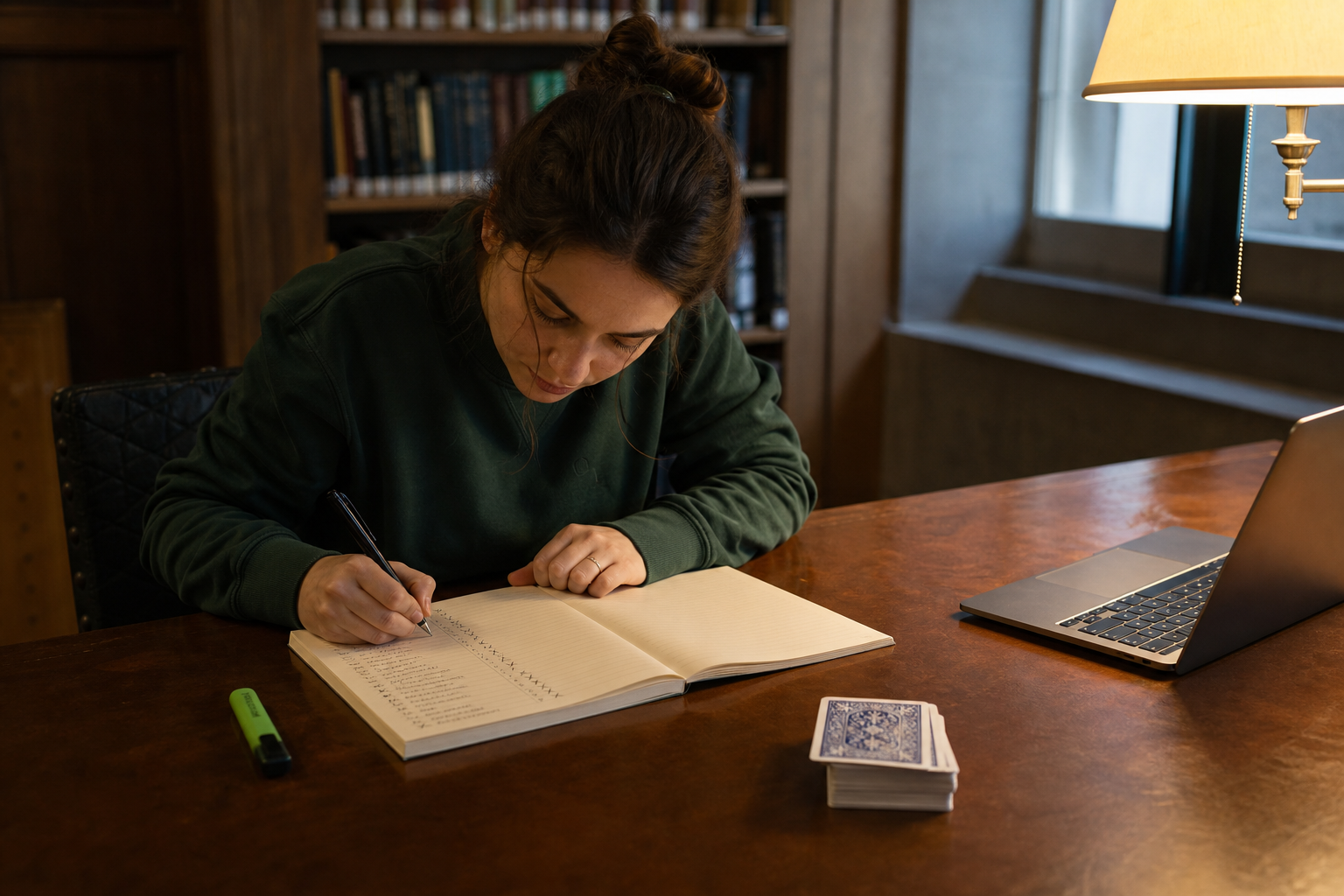
Woman at a library desk keeping a handwritten prediction journal next to a face-down deck of cards

Quick guide

“Psychic ability” bundles together several things: intuition, noticing what others miss, reading people, remembering dreams, and the specific claims of precognition, clairvoyance and mediumship. The first group is real and trainable, and most of the classic “develop your gifts” exercises are, underneath, training for it. The second group has never been demonstrated under controlled conditions, despite a century of trying. This guide separates the two, gives you a way to test yourself that does not fool you, and explains what to expect from courses and mentors who promise to unlock more.

What the words mean

Term The claim What is usually happening
Intuition / clairsentience Knowing without being told Fast pattern recognition from experience; real, trainable, and fallible
Empathy Sensing others’ feelings before they speak Reading face, posture, tone; stronger in highly sensitive people
Clairvoyance / remote viewing Seeing distant or hidden things Not demonstrated in controlled tests; hits are remembered, misses forgotten
Precognition Knowing the future Vague predictions fit many outcomes; specific ones fail at chance rates
Claircognizance / clairaudience Sudden knowing or hearing Thoughts arriving from memory and inference; ordinary and useful
Mediumship Messages from the dead General statements confirmed by the sitter; see medium readings

What a century of testing found

Serious attempts to measure psychic ability go back to the 1930s, when researchers at Duke University introduced the Zener card deck (circle, cross, waves, square, star) to test whether people could guess hidden cards better than chance. The history is well told: early results looked promising, then shrank as controls tightened, and no reliable, repeatable effect survived. That pattern, an effect that disappears when the test gets stricter, has repeated across remote viewing, telepathy and precognition studies since. It does not prove that nothing exists; it does mean that anyone promising to teach you a demonstrable ability is promising something no one has yet shown they have.

What has been shown, repeatedly, is how good people are at being convinced. We remember the hunches that came true and forget the ones that did not; we count a vague prediction as a hit whatever happens; we notice a coincidence and not the thousand non-coincidences around it. Confirmation bias is the ordinary name for it, and every honest self-test has to be designed around it.

Testing yourself without fooling yourself

  • Write first Record the prediction before the outcome, with a date and enough detail that it can be wrong.
  • Count everything Every hunch goes in the journal, not just the memorable ones. Misses count.
  • Know the base rate “I knew who was calling” is not a hit if that person calls most days.
  • Score cold A week later, mark each entry right or wrong without reinterpreting it. Compare to chance.

Most people who do this for a month find they are at chance on specific predictions and rather good at reading people. Both are worth knowing.

The skills that are real and how to build them

Strip the framing from the standard exercises and what is left is a decent programme for becoming more observant and better at people. It is worth doing on its own terms.

  1. Notice more. In any room, spend a minute cataloguing: who is tense, who is bored, who is waiting to speak, what changed since you last looked. Attention is a skill and it improves with practice.
  2. Listen for what is not said. The topic someone keeps circling, the name they avoid, the answer that came too fast. Good readers, good therapists and good friends all do this.
  3. Keep a hunch journal. Write down gut feelings about people and situations, then check them later. You will learn which kinds of hunch you can trust (often: first impressions of people) and which you cannot (often: predictions about events).
  4. Record dreams and mood, briefly. Not for prophecy, but because patterns in sleep and mood are useful, and because it trains recall.
  5. Practise calibrated guessing. Before you check the weather, the score, the email, guess, and note how confident you are. Over time your confidence starts to match your accuracy, which is what “trusting your gut” should mean.
  6. Learn a framework if you enjoy one. Tarot, runes and astrology are structured vocabularies for talking about situations. They can sharpen reflection. They are not instruments that measure anything, and presenting them that way is where trouble starts; see using tarot cards for wellbeing.
  7. Meditate if it suits you. The evidence for meditation reducing stress and improving attention is reasonable (the NIH’s summary is a fair guide). Evidence that it opens a channel to information is absent.

What courses and mentors can and cannot deliver

“Psychic development” is a large market: online courses, mentorship programmes, certification, circles. Some are run by thoughtful people teaching the skills above under a spiritual frame, and students enjoy them. Some are expensive routes to a certificate no one recognises. A few are the front end of a longer sale. Judge them the way you would judge any course.

Reasonable

A stated price and syllabus. Exercises you could do alone. A teacher who says plainly that no ability has been proven and who welcomes your scepticism. No pressure to progress to the next tier.

Walk away

“You have a rare gift that only I can unlock.” Tiers that cost more each time. A required “clearing” or “attunement” before you can learn. Discouraging you from testing yourself. Anything that resembles the removal script dressed as training.

If you are thinking of reading for others, for money, the honest path is to present what you do as reflection and conversation, keep prices posted, make no predictions you cannot back, and never diagnose curses. Five traits of a good reader is a fair standard to hold yourself to.

A note on “controlling” your abilities

Some people who describe strong intuition also describe feeling overwhelmed by it: flooded in crowds, unable to switch off other people’s moods, frightened by vivid dreams or by sudden certainties. That experience is real and usually reflects high sensitivity combined with stress; empaths and trauma triggers covers what helps. If it includes hearing voices, seeing things others do not, or beliefs that others find alarming, please talk to a doctor. Those experiences have several causes, most of them treatable, and a psychic-development teacher is not equipped to tell them apart.

Key takeaways

  • Intuition, noticing and reading people are real, trainable skills. Precognition, clairvoyance and mediumship have not survived controlled testing.
  • Confirmation bias makes everyone feel more psychic than they are; a written, fully counted, cold-scored journal is the only self-test that resists it.
  • The classic exercises are worth doing as observation and listening practice.
  • Frameworks like tarot can sharpen reflection; they do not measure anything.
  • Judge courses by price, syllabus and the teacher’s honesty about evidence. “Only I can unlock your gift” is a sales line.
  • Feeling overwhelmed by sensitivity is common and manageable; unusual perceptions or beliefs deserve a doctor’s attention.

Frequently asked questions

1. Can anyone develop psychic abilities?

Anyone can become more observant, a better listener and a better judge of their own hunches. No one has been shown, under controlled conditions, to develop the ability to know hidden or future facts.

2. How do I know if I am psychic?

Keep a prediction journal for a month: write every hunch down before the outcome, count all of them, and score them cold a week later against what chance would give. Most people find they are good at people and at chance on events.

3. What are the “clairs”?

Clairvoyance (seeing), clairaudience (hearing), clairsentience (feeling) and claircognizance (knowing) are traditional labels for the channel through which impressions arrive. As descriptions of how intuition feels to you, they are fine; as separate abilities, none has been demonstrated.

4. Are psychic abilities inherited?

Sensitivity and perceptiveness run in families, like most traits. There is no evidence of an inherited ability to perceive hidden information.

5. What were the Zener card tests?

A 1930s method for testing card-guessing beyond chance. Early results shrank as controls tightened, and no reliable effect survived. They remain a good template for testing yourself honestly.

6. Does meditation develop psychic ability?

Meditation has reasonable evidence for reducing stress and improving attention, which makes you more observant. There is no evidence it opens access to information you did not have.

7. Why do my hunches about people so often turn out right?

Because first impressions draw on a lot of information processed quickly, and because you remember the hits. Both are ordinary. Write them down and score them to find out how often you are actually right.

8. I knew who was calling before I looked. Is that psychic?

Check the base rate: how often does that person call, and how often did you guess wrong? The classic exercise of guessing the caller feels impressive because the misses are forgotten.

9. Should I take a psychic development course?

If it has a stated price and syllabus, teaches observation and reflection, and the teacher is honest about evidence, it can be enjoyable. Avoid tiered programmes, required attunements, and anyone who says only they can unlock your gift.

10. What is remote viewing?

The claim of describing distant locations by mind alone. Government-funded programmes tested it for years and were closed after reviews found no usable results.

11. Can I use tarot to develop intuition?

Tarot gives you a structured way to think about a situation, which can sharpen reflection. It does not measure anything, and treating it as an instrument is where readings go wrong.

12. How do I “control” abilities that feel overwhelming?

Feeling flooded by other people’s moods or by vivid inner experience usually reflects high sensitivity plus stress; sleep, boundaries and settling routines help. If it includes hearing or seeing things others do not, talk to a doctor.

13. What about spirit guides?

Many traditions describe them, and some people find the idea of a wise inner voice useful for reflection. There is no evidence of external beings; treating the voice as your own considered judgement is the safe reading. See learning to contact your spirit guides.

14. Is it dangerous to develop psychic abilities?

Observation and listening practice is not dangerous. Spending heavily on courses, believing you are under attack, or ignoring symptoms a doctor should see are the real risks.

15. Can I make a living as a psychic?

People do. The honest version presents readings as reflection and conversation, posts prices, makes no guarantees and never diagnoses curses. How the industry is changing covers what clients now expect.

16. Why do I have vivid dreams about things that then happen?

Dreams are numerous and vague, events are numerous, and matches get remembered. Write dreams down with dates and check them cold; the rate of specific, dated hits is what matters.

17. What is the difference between intuition and psychic ability?

Intuition is fast judgement from experience, real and fallible. Psychic ability, as usually claimed, is knowledge with no ordinary source. The first is worth training; the second has not been shown to exist.

18. How long does it take to develop?

A month of journaling and deliberate noticing produces measurable improvement in observation and calibration. No amount of time has been shown to produce the other kind of ability.

Thinking of paying a reader instead?

Our preparation guide covers choosing a reader you can check, questions that get useful answers, and what to do with what you hear.

Read: how to prepare for a psychic reading

Evidence check: the history of controlled testing follows the account of the Duke Zener-card programme; the description of confirmation bias follows Britannica; the meditation evidence follows the NIH summary. Psychic development is an interpretive practice; nothing here is medical advice.

Be the first to write a review

10 COMMENTS

  1. “This sounds like something out of a fantasy novel. If only I could predict when my cat will decide to knock over my favorite vase! Maybe that’s her psychic ability… or just sheer mischief.” 😹

    • “Trust me, your cat has mastered the art of chaos! If only they could use those powers for good instead of ruining your decor!”

    • “Haha, maybe we should start a support group for victims of feline psychic destruction! Who knew cats had such strong ‘mystical’ powers?”

  2. “So I can talk to ghosts now? Great! Just what I needed—more people in my head! Next thing you know, I’ll be hosting a séance for my lunch leftovers!” 😂

  3. I absolutely loved this article! It opened my mind to the possibilities of psychic abilities. The idea that we all have these gifts within us is so empowering! I’m definitely going to start meditating more.

  4. The article provides a decent overview of different psychic abilities, but it lacks scientific backing. I wonder how many studies have been conducted to validate these claims about precognition and clairvoyance?

  5. “I found this post intriguing but slightly confusing. If we’re all supposed to have these abilities, why are some people more ‘psychic’ than others? Are they just better at using their inner voices?”

  6. While some might dismiss these claims as mere superstition, I believe there’s merit in exploring human consciousness. Shouldn’t we keep an open mind about experiences that science hasn’t fully explained yet?

  7. This is just another attempt to sell people on pseudoscience. Psychic abilities? Seriously? There’s no evidence for any of this nonsense. People should focus on reality instead of chasing fantasies!

  8. “Yeah, because trusting your gut has always worked out so well for everyone… Let’s just ignore logic and reason and dive right into the mystical realm of ‘feelings’! Sounds totally safe!” 🙄

LEAVE A REPLY

Please enter your comment!
Please enter your name here

This site uses Akismet to reduce spam. Learn how your comment data is processed.